REVIEW: FOLKSTONE - IL CONFINE

"This is a simplistic (sometimes a little too simplistic) blend of catchy hard rock overlaid with traditional melodies"

REVIEW: SVARTBY - ELEMENTAL TALES

"Elemental Tales is a fun album to listen to, and if that's all you're after it will serve you well"

REVIEW: TROLLBAND - IN THE SHADOW OF A MOUNTAIN

"In the Shadow of a Mountain is a decent album with moments of brilliance, rather than simply an exceptional album."

REVIEW: ELUVEITIE - HELVETIOS

"Though Helvetios doesn't quite live up to its billing as a concept, it's still an impressive effort"

REVIEW: AL-NAMROOD - KITAB AL-AWTHAN

"Kitab Al-Awthan is a genuinely refreshing listen and one that is highly recommended for anyone seeking an original and interesting album"

Showing posts with label REVIEWS. Show all posts

Thursday, 14 June 2012

FOLKSTONE - IL CONFINE

Before we even get properly started with this review, a quick word of warning for people who hate bagpipes: stay away! I know some people who simply can't abide the sound of bagpipes and if you're one of them Folkstone will be your idea of hell. Il Confine is all about the bagpipes, and they generally dictate the main melody of the songs. Fortunately for me, I quite like bagpipes, and I quite like Folkstone too.

If the sound of bagpipes initially generates an image of Celtic lands, it may seem a strange mix with the Italian lyrics throughout the album. However, it is in fact in keeping with the band's roots, utilising the baghèt – not a type of bread after all, but in fact a medieval bagpipe from the band's hometown of Bergamo.

Unlike so many other folk metal bands, Folkstone don't concern themselves with blistering speed, this is all about finding a groove and rocking out, medieval style. In short this is a simplistic (sometimes a little too simplistic) blend of catchy hard rock overlaid with traditional melodies. It makes for an instantly accessible and enjoyable listen.

The album starts strongly, with title track 'Il Confine' laying the foundations that the rest of the album will follow, quickly getting into a comfortable groove. Lead single 'Nebbie' follows, a delightfully catchy, bouncy number that captures the bagpipes at their best. However, while the band do attempt to mix things up with 'Omnia Fert Aetas' and 'Anomalus' the rest of the album falls into the trap of being slightly one-dimensional and forgettable. If the simplicity of the band's concept is attractive at first, after a few tracks it comes to feel rather limiting.

That's not to say that the rest of Il Confine is entirely forgettable. 'Storia Qualunque' livens things up by upping the tempo at just the right time, and provides a nice contrast to the meandering 'Anomalus'. A personal highlight is the epic 'Frammenti', a genuine breath of fresh air with its near-perfect synergy between guitar and bagpipes and tasteful inclusion of flute parts. This is one of the most refreshing folk metal songs I've heard in quite a while and is really worth the album's price alone. A word of praise also for the powerful vocals of Lorenzo Marchesi, which mark Folkstone out ahead of many other medieval metal bands and give extra weight to songs such as 'Luna' and 'Storia Qualunque', and really carries the album's main ballad, 'Ombre di Silenzio'.

In summary, Il Confine is a perfectly enjoyable album, if at times a little predictable and slightly samey. There are plenty of good things here to get excited about, and as a simple rock-out album it is an admirable attempt, however it lacks the depth to encourage repeat listens and by the end of the album some of the songs begin to blend into one another. Nevertheless, this is a band who have clearly discovered what they're good at and have focused on those elements of their music, and there's plenty to be said for that.


VERDICT

Tuesday, 29 May 2012

SVARTBY - ELEMENTAL TALES

Svartby have in the past been derided as simply another derivative folk metal by-the-numbers band, a kind of budget Finntroll. On this, their third full-length, they have finally begun to answer some of those critics, and though Elemental Tales will win few awards for originality, it is the work of a band that is at last showing some desire to branch out and forge their own path. Gone are the broken Swedish lyrics, replaced instead with broken English. It's a start at least.

Their previous EP, Scum from Underwater, had been a small hint that change was afoot, though I dared not get my hopes up too much for this release. I needn't have worried, because in Elemental Tales all the positive signs from Scum from Underwater have been realised in long-play format.

The rip-roaring 'Flaming Balls' encapsulates perfectly the great things about this album. It doesn't let up for a second, grabbing the listener by the balls and yanking them repeatedly for three minutes. It's a breathless whirligig of noise that simply refuses to slow down and demonstrates the very best of Svartby. 'Scum from Underwater' and 'Morning Wood' further showcase a band that is at its best when they really let loose and unleash the noise.

The album seems to lose some of its momentum on some of its slower and midpaced tracks, such as 'Sleepy Devils' and 'Ash and Dust', and though it's commendable that Svartby have been trying to add a bit of variety to their repertoire, this is not an area in which they naturally seem to excel. 'Ash and Dust' in particular feels a little aimless, and the keyboard synths that carry this track through from start to finish sound a bit cheap and reminiscent of a tacky ringtone.

Musically this is all very familiar fare, mixing typically bombastic folkish melodies with Bodom-esque metal and it rarely strays from this tried and tested style. Most of the songs are catchy and easy to follow (for example, the excellent 'Done with the Wind'), which makes this the ideal album if familiarity and comfort is all you require of an album, but if it's a challenging listen you're seeking you won't find it here. A further word of warning: a sense of humour (and a pretty childish one at that) is required to really enjoy this album. Elemental Tales is a fun album to listen to, and if that's all you're after it will serve you well, but if you're looking for a deeper, more nuanced folk metal experience, you'd do well to look elsewhere.

VERDICT

Monday, 12 March 2012

TROLLBAND - IN THE SHADOW OF A MOUNTAIN

Recorded on a shoestring budget in a Vancouver apartment, one could be forgiven for having low expectations of Trollband's debut album, In the Shadow of a Mountain. However, those expectations would soon be confounded, as this is an engaging and mature release, and a very enjoyable listen.

The most striking aspect of In the Shadow of a Mountain is the fantastic variety in the songwriting. With songs ranging from the folky 'Heathen Blood', to the epic title track, to the sinister 'Nidhoggr', there is plenty here to keep the listener interested throughout. Every track is competently written as well, and though a few of the tracks feel slightly uninspired, every song is perfectly listenable.

The album begins with 'Fire and Ash', a solid but unspectacular opening track, which acts as a gentle introduction to the band and gives a flavour of what to expect from the rest of the album, with harsh vocals over energetic Viking metal that is reminiscent of Ensiferum. The following track, 'Nidhoggr', veers in a completely different direction, its black metal stylings giving the track a far more sinister edge than most of the other material on the album. Third track, 'Heathen Blood' again signifies a change of tone to a typically high-tempo, folky drinking song. Again, it's competently done, featuring all you would expect from a typical folk metal by-the-numbers song, with folky keyboard melodies overlayed on top of speedy, driving metal. It lifts the pace nicely after the rather ponderous 'Nidhoggr', though it brings little in the way of actual innovation to the table.

Title track, 'In the Shadow of a Mountain' is a hulking beast of a song, sounding epic despite its low-fi production, but the real highlight of this album is 'The Return'. Full of energy and packed with instantly catchy riffs, the bludgeoning verses give way to lighter acoustic sections seamlessly, before returning to pummel the listener once again. A word also for what is effectively the album's closing track, 'We Live'. In truth, much of this song is fairly average – not poor, but nothing particularly special. However, it is the middle section of this song (from about 2 minutes, 40 seconds onwards) that really excited me. Such a simple riff but ever so catchy, it begins with a lone accordion before gradually building to epic proportions. This section alone is worth getting the album for.

As a self-funded release the production is understandably rough, but this hardly detracts from the music at all. There are of course times when it feels as if the songs would have benefited from a more professional production but I've heard plenty of releases from more established acts with lower sound quality than this and it is unlikely to spoil your enjoyment of the album.

While there is plenty of cause for optimism, Trollband's biggest task will be finding a way to stand out in an increasingly crowded genre. In the Shadow of a Mountain is a decent album with moments of brilliance, rather than simply an exceptional album. If Trollband are to break out of the underground they will have to harness their considerable potential to sustain those brilliant passages over the length of a whole album.

VERDICT

The album is available to download for FREE here.

Monday, 27 February 2012

ELUVEITIE - HELVETIOS

Over the last few years, Eluveitie have established a reputation (rightly, I should add) as one of the best folk metal acts on the scene. Their last album, Everything Remains (As It Never Was), represented probably the ultimate refinement of the sound they had been crafting over their previous three releases. Having reached this point, the band inadvertently found themselves in the unenviable position of having to pen a follow-up to that seminal record.

This being the case, it was probably an intelligent decision to change their course slightly for the release of Helvetios, by recording their first ever concept album. Concept albums are viewed in a different light to the conventional release, and when assessing this album I have judged it by a slightly different set of criteria than I would usually have done. Having said this, I found it difficult to buy into the concept of Helvetios as a continuous narrative. There is little sense of overall coherence and as such this album sounds like just another collection of songs, rather than a true concept album.

That said, there is plenty of excellent material here and anyone who has ever enjoyed Eluveitie's previous work will find plenty to keep them satisfied. Songs such as 'Havoc', with its twisting melodies, and 'The Siege', which features some absolutely stunning violin work, fit right in with the very best of the band's catalogue.

Though musically the album is quite similar to their previous efforts, it does seem that Eluveitie have tried to branch out slightly on Helvetios. Title track 'Helvetios' and 'Meet the Enemy' both tend to stick closer to the metal end of the spectrum, their folk elements uncharacteristically toned down, perhaps representing an effort from the band to demonstrate a wider appeal and cater to fans of standard melodic death metal.

Also, songs like 'Luxtor' and 'A Rose for Epona' are clearly more catchy and easily accessible. The cynic in me suggests that the latter of these two was intended as a radio-friendly single release, with its catchy, singable vocals, and though it is a decent and reasonably addictive commercial metal song, it's also the type of song that will grow stale with repeat listens. And, of course, that's without even mentioning its uncanny resemblance to Blood Stain Child's 'Metropolice'.

Some of the commercial elements aside, the highlight of the album for me is undoubtedly 'Meet the Enemy'. Preceded by the spine-chilling 'Scorched Earth' it is one of the only occasions on the album that truly evokes the visceral horror and chaos of the war that has inspired this album.

At this point I should admit that I have been quite harsh in my analysis of this album, because there really are plenty of brilliant moments here, and again a remarkably and consistently high standard throughout the album. If anything, this harsh judgement is a result of the high standards Eluveitie have set with their previous releases.

Though I don't feel Helvetios quite lives up to its billing as a concept, it's still an impressive effort and is undoubtedly one of the better albums I'll review this year. Moreover, it should see Eluveitie maintain their status as one of the top folk metal acts in the world. However, if you're new to the band, while you would undoubtedly find plenty on this album to satisfy you, I'd advise you turn to some of Eluveitie's earlier releases to get a truer picture of what this band is capable of.

VERDICT 

Friday, 10 February 2012

AL-NAMROOD - KITAB AL-AWTHAN


Folk metal at its best is a fantastic form of escapism and certainly the most evocative of all of metal's kaleidoscope of genres. It's this quality that makes Al-Namrood's Kitab Al-Awthan ('The Book of Idols') such an engaging and intriguing listen. From the first jarring note of 'Mirath al Shar' the album transports the listener through a particularly menacing vision of the band's native Saudi Arabian culture.

It's this that really sets Al-Namrood apart from the pack. The Middle Eastern influences really bring a unique and completely fresh feel to the band's familiar black metal stylings. Everything you would expect from a black metal band is present – harsh vocals, fierce blast beats and that whining guitar tone that is particular to this strain of metal – however its dark and otherworldly atmosphere is enhanced by the Arabian instrumentation and arrangement. Long after the earliest black metal bands terrified listeners with their new demonic sound, it is rare to find a band today that still sounds genuinely frightening. Satan simply isn't scary any more. The Middle East, on the other hand, most certainly is and it is this – that uncomfortable unfamiliarity – that makes Kitab Al-Awthan such a spine-tingling experience.

It is very easy to label albums that mix different styles as little more than a novelty piece (indeed, there are some who believe that all folk-inspired metal is simply a novelty, rather than a mature and nuanced genre in its own right), but it is an accusation that would be harsh to level at Al-Namrood. This album is far more complex than simply overlaying Eastern-inspired melodies on top of traditional black metal, Al-Namrood's entire approach to making music is clearly influenced by traditional Arabian music. The clearest example of this on Kitab Al-Awthan is the penultimate track 'Bani La'em', which is driven mostly by its guitar and drum work and yet still maintains its Arabian flavour just as strongly as any other song on the album, while its more understated use of traditional instrumentation make it more accessible to those who prefer more straightforward black metal.

Kitab Al-Awthan is a challenging listen and is at first slightly overwhelming. The familiar black metal influences are instantly recognisable, but often the unfamiliar melodies and song structures are surprising and, at first, slightly confusing. This album is an ideal introduction for listeners, not only to Al-Namrood, but also to Middle Eastern metal in general. However, those who are already familiar with the band are unlikely to find anything they haven't already heard on previous releases. As a display of brutal, Arabian black metal Kitab Al-Awthan is a compelling proof-of-concept, however the lack of variety on display may discourage repeat listens.

I found Kitab Al-Awthan to be a genuinely refreshing listen and one that is highly recommended for anyone for anyone who is seeking an original and interesting album, especially if your tastes are suited to the more brutal end of the metal spectrum.

VERDICT

Wednesday, 25 January 2012

SWORDBEARER - HONOR


Swordbearer continue the good work they began on debut effort Inspired by the Trees, with their sophomore release, Honor. A far more mature album than its predecessor, Honor is that rarest of albums: unashamedly low-fi, but maintaining an epic feel throughout. As a relatively low-budget, self-produced album, this is some achievement and demonstrates the quality of the songs. The album feels epic not as a result of its production and arrangement, but because of its massive riffs and soaring melodies.

The album is also remarkably diverse, ranging from Viking metal-inspired epics ('They Came By Wind and Sail', 'Throne of Ageless Kings'), to folk ballads ('Release My Aching Soul', 'We Await the Spring'), to the instrumental metal-cum-neofolk closer 'Where Mountains Meet the End'.

Intro track 'In the Name of Glory and Honor' kicks things off in typically bombastic fashion, and the 9-minute 'They Came By Wind and Sail' is suitably epic. However, the album loses a bit of momentum with acoustic number 'Release My Aching Soul'. Not that there's anything wrong with the song, it's a very well-written number and acts as a good demonstration of Swordbearer's folky influence, but it comes slightly too early in the album for my liking.

My pick of the bunch is the excellent 'Throne of Ageless Kings' - perfectly written and stuffed full of interesting and diverse sections, and featuring some ridiculously catchy riffs. The next track, 'Pathway to the End' is another well-crafted number, again displaying liberal folk influence, and coming as it does immediately after '...Ageless Kings' acts as a perfect demonstration of Swordbearer's flexibility, from epic, black metal-inspired brutality to catchy, acoustic folk.

Probably the most unusual track on the album is the instrumental closing track, 'Where Mountains Meet the Sky'. Probably the simplest way to describe this song is that it sounds like something Judas Priest would create if they played neo-folk. It's a bizarre but engaging way to finish the album.

If I had to pick out a weak point, it would be the vocals. They're fine and perfectly listenable, but a little uninspiring and don't really do justice to the compositions. The screamed vocals are distant and faint, making them sound a little weak, while the clean vocals often fail to hit the high notes they were aiming for (for example, on 'We Await the Spring').

Another bugbear is the keyboard sound. I don't generally like to criticise too heavily the production of self-released albums because they inevitably have limited resources to work with, but I feel this is an important point. The keyboards, intended as a proxy for genuine folk instruments or string sections, just sound a little bit too artificial and it detracts from the album's epic sound. This is clearly a very important element in the music and if this was improved it could elevate Swordbearer from promising hopefuls to truly fulfill their potential. It's not enough to derail the album, but it's frustrating to think what Swordbearer could achieve if they were given free reign in the studio.

If you're looking for a smooth, polished product this album is probably not for you. However, if you're able to overlook the rough and simplistic production you'll find an album stuffed full of excellent folk-tinged symphonic metal, with many memorable hooks and a good range of material that never ceases to engage the listener. This is an exciting release from a band that is still very young and promises much for the future.

VERDICT 

Friday, 30 December 2011

METSATÖLL - ULG


The release of Metsatöll's fifth album, Ulg, was highly anticipated in their native country, Estonia. It perhaps wasn't quite so hotly anticipated around the rest of the world, but since the release of Äio, their debut on Spinefarm Records, the band has begun to make greater waves abroad, and with Ulg they look set to continue that progress. Ulg is a record in much the same vein as their previous release, presenting a fascinating blend of Estonian folk music and sludgy, midpaced metal.

Friday, 16 December 2011

SJUK - TIME HAS COME...

Time Has Come... is the debut EP by French band Sjuk and represents a decent introduction to a band clearly still finding its feet. The EP is unlikely to earn Sjuk a huge degree of fanfare but promisingly displays some encouraging signs of progression over their 2009 demo, as the band hones its blend of metal and Celtic folk. It's become a crowded genre but is not an easy style to master and Sjuk appear to be making strides towards mastery of that particular style.

Monday, 12 December 2011

BEER BEAR - FOLK 'N' ROLL

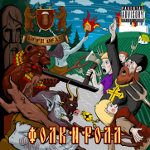
We may as well start this review by acknowledging a simple fact that's staring us all in the face: Beer Bear is probably the silliest band name of all time. If the name conjures the image of an inebriated cartoon bear roaming the woods in a drunken stupor, then the EP's artwork only enhances this perception – adding shotguns and men of God into the equation for good measure! And, as if that wasn't enough, opening track, 'Folk 'n' Roll' (Фолк-н-Ролл) simply further enhances the imagery with its plodding tempo and drunken vocals.